


CRM & marketing automation
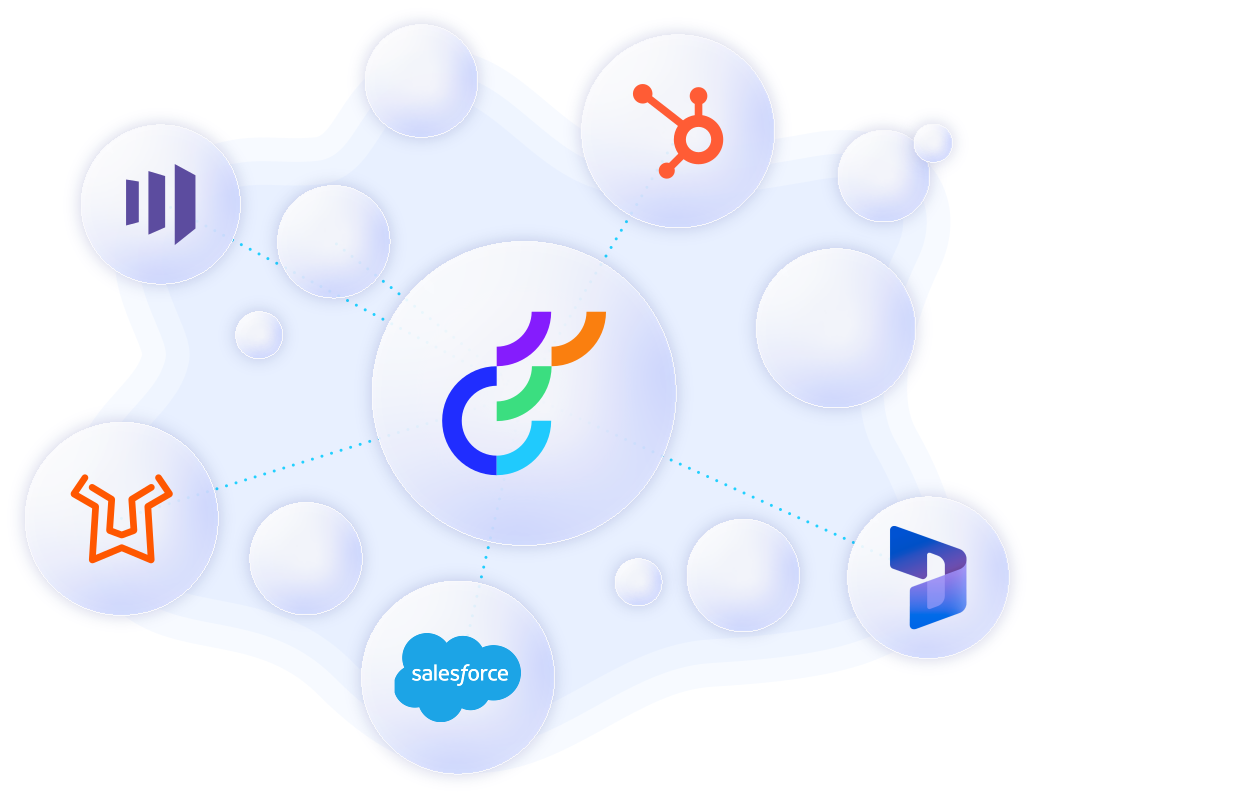
Let your CMS talk to your preferred CRM and marketing automation tools, with direct connections to Salesforce, Microsoft Dynamics, Marketo, HubSpot, and more.
Content Management System
Optimizely Content Management System equips marketers and developers with a modern, fully composable suite of user-friendly tools. Deliver impactful experiences across any channel, and personalize with AI-driven insights.
Get complete content lifecycle coverage with a seamless connection to Optimizely Content Marketing Platform. Publish your web content in the same place where all your content planning & collaboration happens.
Know which topics drive conversions and revenue so you can create only high-impact content. Deliver 1:1 personalization with AI-powered recommendations that act upon the unique interest of each site visitor, in real-time.
Get freedom of choice with coupled, decoupled or headless architecture. Scale rapidly and easily remove, add or integrate individual services and components when your requirements change.


What sets us apart
Let your creativity run wild with unlimited content layouts and a drag-and-drop page builder.
Use Graph, an Optimizely service powered by GraphQL APIs, to deliver content anywhere you need it to go. Served from the CDN, it's fast & performant.
Use built-in features like Visitor Groups combined with Content Recommendations to deliver meaningful personalization that converts.
Optimizely Digital Asset Management is a fully featured DAM that connects directly to the CMS to serve as the single source of truth for all your assets.
Together, with iO and Optimizely, we established a content platform that takes a leading position worldwide within our core business and that is now ready for the digital future, new marketing activities, better measurement and B2B lead generation. This is on a global scale, adapting to all cultural differences, with always creating the best online customer experience for our clients in mind.
Robbie SchoutenOnline Marketing Manager, Losberger De Boer
We produce a significant amount of content daily and needed a technology architecture that allowed us to perform this at scale across a network of 19 organizations including NRL, our Clubs and States.
Domenic RomeoHead of Technology, National Rugby League
